Home / Ceylon Cinnamon Guide / Ceylon vs Cassia
True cinnamon identification
Ceylon cinnamon
vs cassia.
They are related spices, but they are not interchangeable identities. Learn the visible differences, what labels should disclose and why powder requires stronger traceability.
01 · The quick answer
How are they
different?
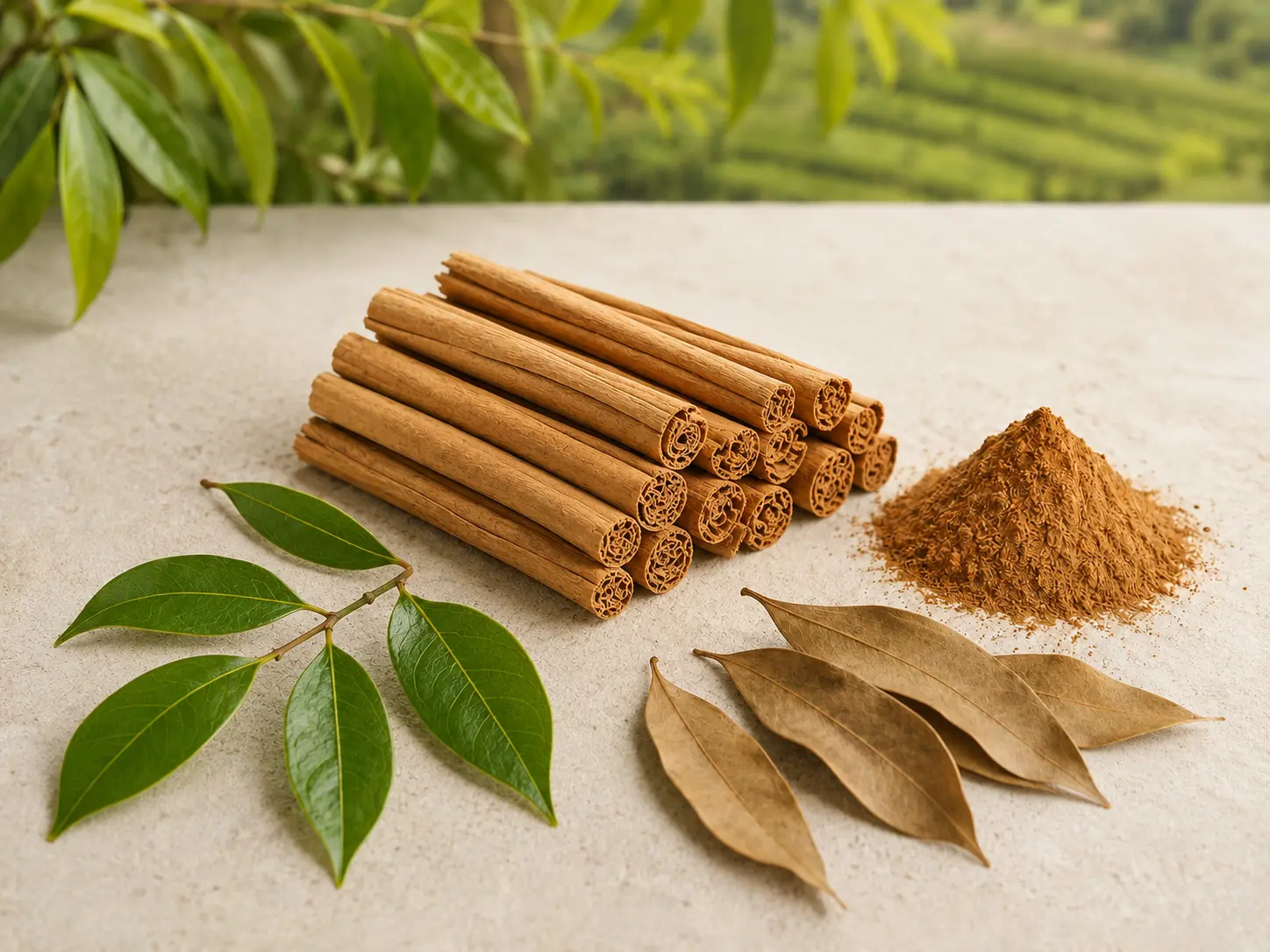
Ceylon cinnamon is Cinnamomum verum, the Sri Lankan “true cinnamon” recognised by its fine, pale, multilayered quills and delicate aroma. Cassia is produced from other Cinnamomum species and normally forms a darker, harder, thicker scroll.
02 · Side-by-side comparison
Use several clues,
not one shortcut.
Natural products vary. The most dependable identification combines botanical species, origin, physical structure and supplier traceability.
| Feature | Ceylon cinnamon | Common cassia types |
|---|---|---|
| Botanical identity | Cinnamomum verum (syn. C. zeylanicum) | Commonly C. cassia, C. burmannii or C. loureiroi |
| Origin | Native to Sri Lanka; protected Ceylon Cinnamon PGI production is linked to Sri Lanka | Varies by species, with major origins including China, Indonesia and Vietnam |
| Whole-stick structure | Many fine layers of inner bark telescoped into a filled quill | Usually one thick, hollow scroll or a few thick layers |
| Colour | Pale tan to light brown | Usually darker reddish brown |
| Texture | Fine, papery, fragile and relatively easy to crumble | Dense, woody, hard and difficult to break |
| Flavour and aroma | Delicate, sweet, floral and citrus-like | Stronger, hotter and more forceful |
| Coumarin | Naturally low | Generally much higher |
| Reliable purchase check | Species, Sri Lankan origin, traceability and visible multilayered quill structure | Declared species and country of origin |
03 · Identifying whole sticks
Look at the
cross-section first.
- 1Count the layers
Ceylon quills contain many thin bark layers and small inner pieces. Cassia usually shows one thick hollow curl.
- 2Check the texture
A Ceylon quill is fine and fragile. Cassia is typically woody and difficult to break by hand.
- 3Compare colour carefully
Ceylon is generally pale tan; cassia is commonly darker red-brown. Colour supports identification but is not proof by itself.
- 4Read beyond “cinnamon”
Look for Cinnamomum verum, Sri Lankan origin and a traceable producer or supplier.
04 · Ground cinnamon
Powder hides the
best visual evidence.
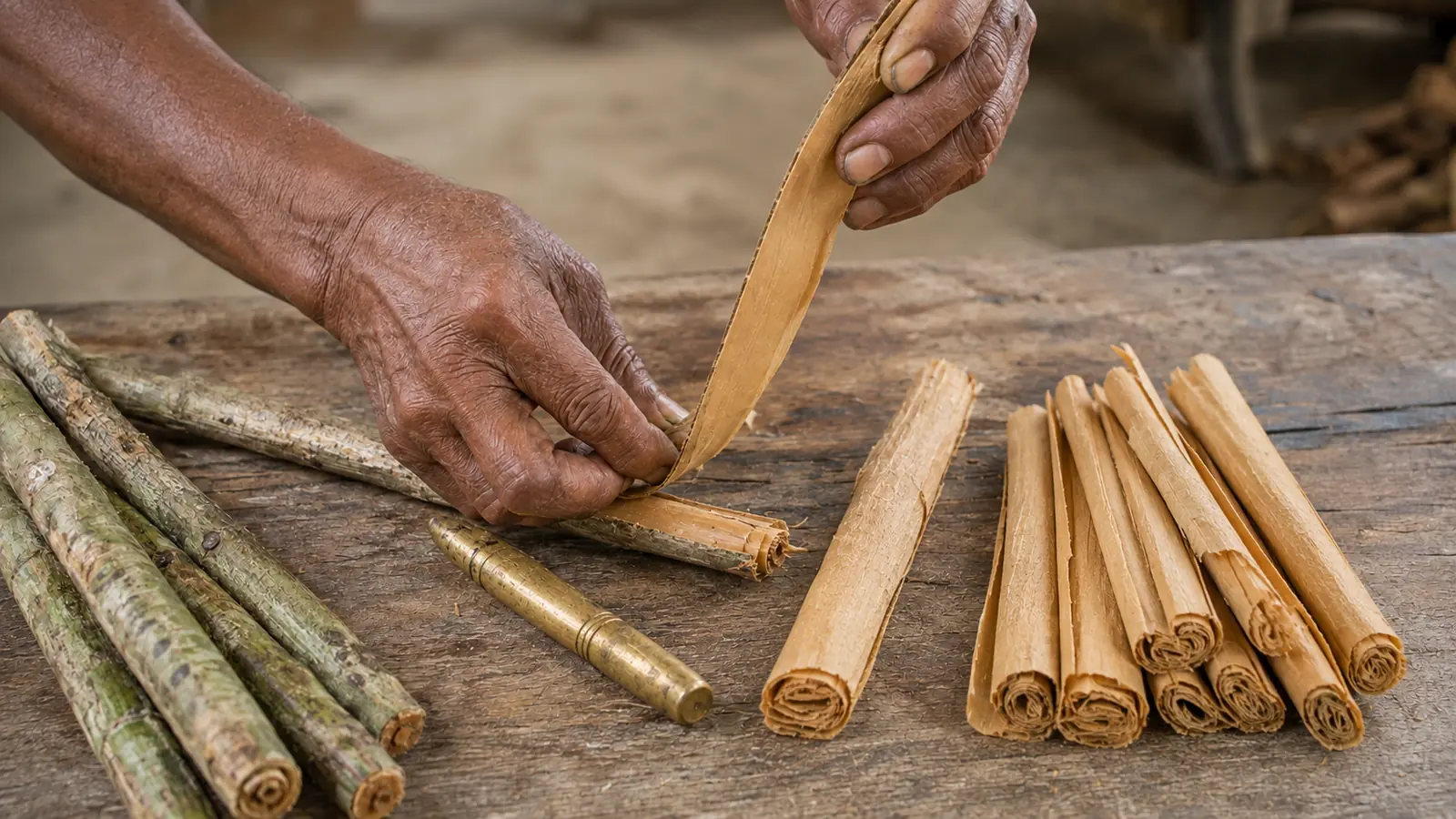
Once cinnamon is ground, the layered quill structure disappears. Colour, smell and taste can suggest a difference, but they cannot reliably prove species or detect a blend.
For powder, verify the supply chain
Check the botanical species, country of origin, producer identity, batch traceability and supporting analysis or certification where commercial risk justifies it. An unverified logo is not evidence.
06 · Frequently asked questions
Practical answers
for buyers and readers.
Is cassia fake cinnamon?
No. Cassia is a genuine spice made from other Cinnamomum species. The misleading practice is selling cassia, or a cassia blend, as Ceylon cinnamon.
Can I identify Ceylon cinnamon powder by colour?
Not reliably. Grinding removes the distinctive layered quill structure, and colour can vary. Check the species, origin, supplier traceability and supporting verification where the risk or purchase value justifies it.
Why is Ceylon cinnamon more expensive than cassia?
The premium reflects its limited origin, skilled hand peeling and quill making, careful grading, delicate handling, traceability and demand for its refined flavour and naturally low coumarin.
Does light colour alone prove that a stick is Ceylon cinnamon?
No single feature is absolute proof. Use several indicators together: fine multilayered structure, fragile texture, botanical name, Sri Lankan origin and a traceable supplier.
Sources and review
Evidence before
marketing claims.
Prepared and maintained by Ambokka Plantation, a directly managed plantation in Pallepola, Matale. Last reviewed: 24 August 2026.
Continue learning
See how true cinnamon
becomes a quill.
Follow the Sri Lankan process from a managed cinnamon bush through harvesting, scraping, peeling, quill assembly, shade drying and grading.